
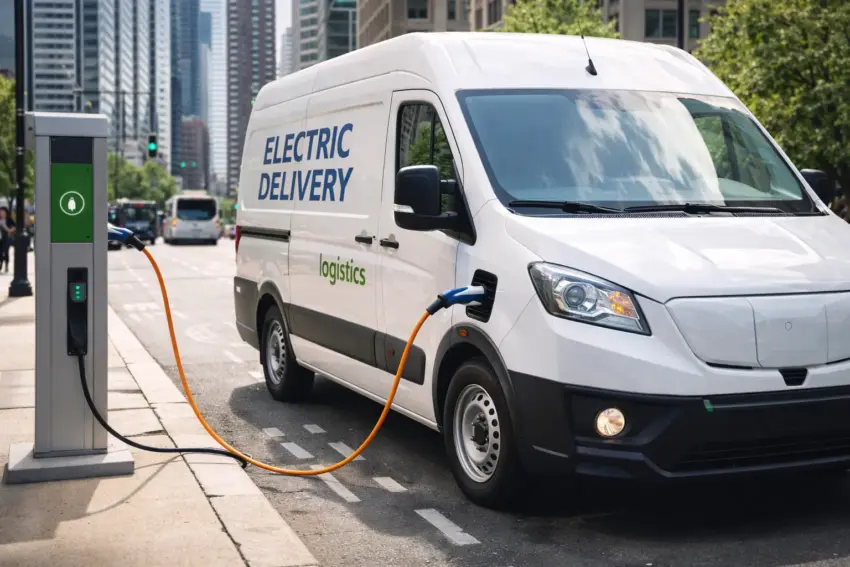
Logistics firms are trialing electric vans on high-density urban routes, aiming to cut fuel costs, comply with tightening emissions rules, and reduce noise in residential neighborhoods. The pilots focus on delivery corridors where stop-and-go driving is constant and daily mileage is predictable—conditions that can make electric vehicles (EVs) more cost-effective than diesel vans despite higher upfront prices.
Why cities are the first target
Urban delivery fleets face growing pressure from low-emission zones, congestion policies, and public expectations around air quality. At the same time, dense routes can be ideal for electrification: depots are close to delivery areas, vehicles return to base daily, and regenerative braking helps efficiency in heavy traffic.
- Predictable mileage: many routes fit within typical EV range, even with multiple stops.
- Depot-based charging: overnight charging works well for scheduled operations.
- Lower operating costs: electricity can be cheaper than diesel per kilometer, depending on tariffs.
- Reduced maintenance: fewer moving parts and less brake wear in stop-and-go driving.
- Policy compliance: easier access to restricted urban zones as rules tighten.
How the trials are being designed
Most trials start with a small number of vehicles and carefully selected routes. Operators track energy use, charging downtime, driver feedback, and delivery performance against diesel benchmarks. Many fleets also experiment with different charging strategies—slow overnight charging, opportunity charging during breaks, and load balancing to avoid peak electricity costs.
- Route selection: dense neighborhoods with stable daily distances and frequent stops.
- Payload testing: performance measured under real parcel volumes, not empty-vehicle conditions.
- Charging patterns: overnight depot charging versus mid-day top-ups.
- Seasonal effects: range impact from winter heating and summer cooling.
- Driver usability: cabin ergonomics, acceleration, and ease of charging.
What it means for Germany’s urban logistics
In Germany, electrifying delivery fleets aligns with both climate targets and local air-quality goals, particularly in cities that already manage traffic and emissions through zoning and enforcement. High-density routes in Berlin, Hamburg, Munich, Cologne, and the Ruhr area are typical candidates for pilots because fleet operators can centralize charging at depots and measure performance at scale.
For residents, the most noticeable impact could be quieter early-morning deliveries and reduced local pollution on streets where vans stop frequently. For city governments, the trials provide real operational data that can inform infrastructure planning, such as where depot charging upgrades or curbside charging bays might be necessary.
Key obstacles: charging, grid capacity, and cost
The biggest barriers are less about the vehicles and more about the ecosystem around them. Depot charging can require expensive electrical upgrades, and permitting timelines can slow rollout. Fleet managers also need to manage peak power demand: charging dozens of vans simultaneously can create load spikes that increase costs or exceed site limits.
- Depot upgrades: electrical capacity, transformers, and cabling can be major investments.
- Permitting delays: grid connections and construction approvals can slow deployment.
- Peak tariffs: unmanaged charging can raise electricity costs during high-demand hours.
- Winter range loss: heating and battery performance can reduce usable range.
- Vehicle availability: supply constraints and long lead times can limit scaling.
How firms judge success
Logistics operators typically evaluate electric vans on total cost of ownership and service reliability. The headline question is whether an EV can complete routes consistently without disrupting delivery schedules. If the answer is yes, scaling becomes a matter of infrastructure and financing rather than operational feasibility.
- Route completion rate: ability to finish shifts without unscheduled charging.
- Cost per stop: energy, maintenance, and downtime measured per delivery.
- Vehicle uptime: reliability and time out of service for repairs or charging issues.
- Driver acceptance: ease of use, comfort, and training needs.
- Infrastructure scalability: whether depots can add chargers without major disruption.
Bottom line
Electric van trials on dense city routes are a practical step toward cleaner urban logistics. The strongest business case appears where routes are predictable, depots can charge overnight, and access rules favor low-emission vehicles. The main constraints remain infrastructure upgrades, grid capacity, and managing charging costs—factors that will determine whether pilots turn into large-scale fleet conversions.