
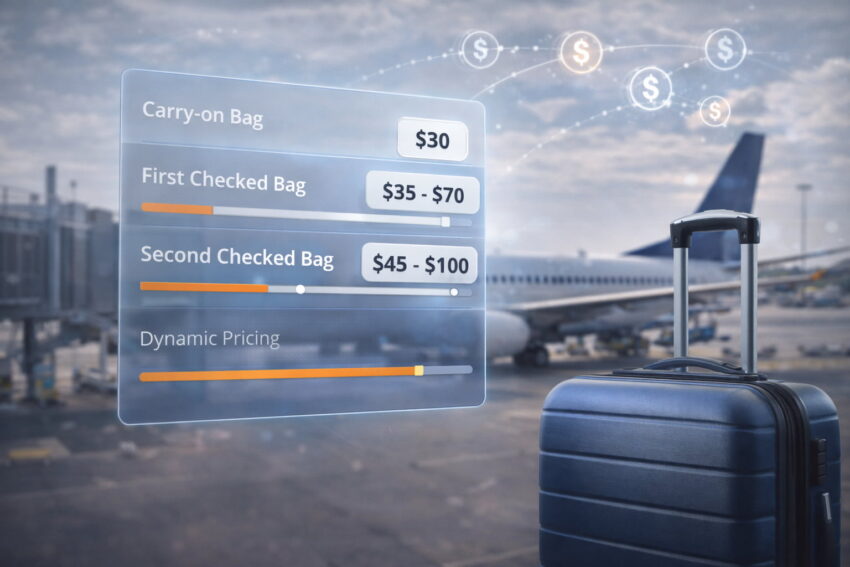
A major airline is introducing dynamic baggage pricing across its route network, shifting checked and carry-on fee structures toward a model that adjusts based on demand, booking timing, route characteristics, and operational constraints. The change reflects a broader push in aviation to optimize ancillary revenue—fees beyond the base ticket—while using pricing signals to manage capacity in the cargo hold and reduce last-minute congestion at airports.
What “dynamic baggage pricing” means
Dynamic pricing applies variable fees instead of a fixed price list. Under this approach, baggage charges can move up or down depending on factors such as seasonality, flight load, how early a passenger adds a bag, and how constrained the aircraft is on a specific day. In practice, the same bag could cost different amounts on two routes—or even on the same route—if purchased at different times.
- Booking timing: adding bags early may be cheaper than paying at the airport.
- Route demand: high-demand routes can carry higher fees.
- Flight load and aircraft type: limited hold space can increase prices.
- Seasonality: peak travel periods often raise ancillary fees.
- Operational constraints: weight limits or cargo priorities can affect pricing.
Why airlines are changing baggage fees now
Airlines have long relied on baggage revenue, but traditional fixed-fee tables can be blunt instruments. A dynamic model allows carriers to steer passenger behavior—encouraging travelers to prepay, pack lighter, or shift bags into cabin allowances where possible. It can also help airlines avoid last-minute surprises, such as overloaded holds that force gate-checking or slow down turnaround times.
For airlines, the advantage is twofold: better yield management and improved operational planning. For passengers, the result is more variable pricing—sometimes cheaper, sometimes higher—depending on when and how they buy baggage.
What passengers might notice
Dynamic baggage pricing changes the shopping experience. Instead of a consistent “first bag” price, travelers may see baggage offers that look more like seat selection or fare bundles, with prices that update as they change flights or return later to complete a booking.
- Wider price ranges for the same baggage option across different dates and routes.
- More nudges to prepay, with airport fees positioned as the most expensive choice.
- Bundle variations where baggage is packaged with seats, boarding priority, or flexibility.
- Stricter enforcement of cabin size/weight as airlines protect overhead bin space.
Potential benefits for travelers
Supporters argue dynamic pricing can create more “fair” outcomes by offering lower fees to passengers who plan ahead and travel on lighter-load flights. It can also reduce airport stress if more travelers prepay and arrive with clearer expectations, reducing disputes at check-in counters and gates.
Concerns: transparency and comparison shopping
Critics worry that dynamic baggage fees can make travel costs harder to predict and compare—especially when base fares are low but add-ons fluctuate. Consumer advocates often emphasize that passengers should see the total trip cost early in the booking process, not discover fee spikes at checkout or after purchasing the ticket.
For travelers in Germany and across the EU, transparency is particularly relevant because consumer protection rules and airline advertising practices are frequently scrutinized. If baggage fees vary widely, regulators may pay closer attention to how and when airlines disclose full costs.
How to avoid paying the highest baggage prices
Passengers can reduce the risk of high fees by treating baggage like a time-sensitive add-on rather than an airport decision. Dynamic systems typically reward earlier purchases and penalize late additions.
- Add bags during initial booking when prices are often lowest.
- Check fees for nearby dates if your schedule is flexible.
- Compare bundles that may include baggage more cheaply than buying separately.
- Confirm cabin limits to avoid forced gate-check fees.
- Review loyalty and card benefits that may include baggage allowances.
Bottom line
Dynamic baggage pricing is the latest step in airlines’ shift toward airline-style yield management for every part of the trip, not just the seat. For passengers, it means baggage costs may become less predictable—but potentially cheaper when purchased early or on lower-demand flights. The key impact will be on transparency: how clearly the airline communicates price changes and how easily travelers can understand the true cost of flying on a given route.