
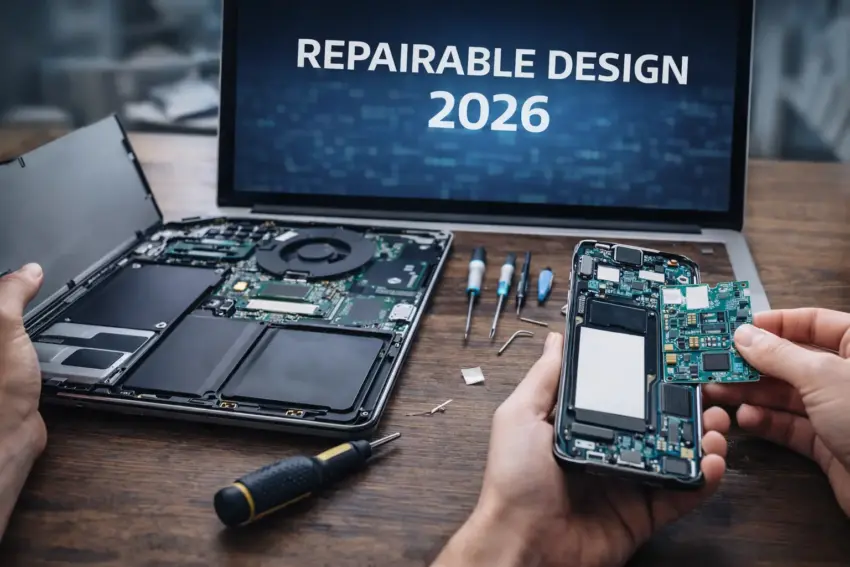
Consumer electronics brands are shifting more of their 2026 product lineups toward repairable designs, responding to tougher sustainability expectations, rising repair costs, and regulatory pressure in Europe to extend device lifespans. The trend is showing up in more modular components, easier battery replacement, better parts availability, and clearer repair documentation—changes that could reshape how long people keep phones, laptops, headphones, and home devices before upgrading.
What “repairable design” means in practice
Repairability is not one feature, but a collection of design choices that make devices easier to open, diagnose, and fix. For years, ultra-thin hardware and aggressive sealing made repairs difficult and expensive. In 2026 lineups, brands are increasingly emphasizing the opposite: accessibility, standardized components where possible, and reduced reliance on permanent adhesives.
- Easier battery replacement with fewer glued parts and clearer access paths.
- Modular components (ports, speakers, cameras, buttons) designed for quicker swaps.
- Standard fasteners replacing proprietary screws and excessive clips.
- Parts availability for several years, including batteries and screens.
- Repair documentation and diagnostics that independent repair shops can use.
Why the shift is accelerating in Europe
In Germany and across the EU, the “right to repair” debate has moved from activism into mainstream policy. Regulators have been pushing for longer-lasting products, clearer labeling, and access to spare parts—especially for categories that generate large volumes of e-waste. As compliance requirements expand, brands are increasingly building repairability into new models rather than maintaining separate designs for different regions.
At the same time, consumers are showing less tolerance for devices that become expensive to maintain after warranty. High screen and battery replacement prices have made total cost of ownership more visible, creating market space for products marketed around longevity and serviceability.
Which products are changing fastest
The strongest momentum is currently seen in categories where wear and tear is predictable—batteries, ports, hinges, and screens. Brands are prioritizing parts that most often fail, because small repair improvements can prevent devices from being discarded early.
- Smartphones: better battery access, more replaceable back panels, improved parts programs.
- Laptops: modular storage and memory, standardized screws, more repair-friendly keyboards and trackpads.
- Wearables and earbuds: more serviceable charging cases and replaceable components where possible.
- Smart home devices: easier power and connectivity module replacement, longer software support pledges.
Design trade-offs brands must manage
Repairability often competes with other priorities. Water resistance, ultra-thin profiles, and rigid frames can be harder to achieve when devices are designed to open easily. Brands are trying to balance these goals by using improved seals, stronger modular housings, and clearer service procedures—while keeping durability and premium aesthetics intact.
There is also the question of pricing. More repairable designs can add manufacturing complexity, and extended spare-parts programs require logistics investment. Companies betting on repairability argue that the business case improves through customer trust, longer upgrade cycles tied to brand loyalty, and reduced regulatory risk.
What it means for consumers
If repairable design becomes common across 2026 lineups, consumers in Germany may see three immediate benefits: lower repair friction, longer device lifespan, and more options for where to get repairs done. Devices that are easier to fix also tend to hold resale value better, because a buyer can replace a battery or a broken port without paying near-new prices.
- Cheaper long-term ownership if common repairs become faster and parts become available.
- More repair choices through independent shops, not only official service centers.
- Less e-waste as devices stay in use longer and enter second-hand markets.
What to watch in 2026 product announcements
Brands increasingly highlight repairability in marketing, but the real test is in the details. Buyers can look for signals such as published spare-parts timelines, transparent repair pricing, and the availability of repair manuals. Another key indicator is whether batteries and displays can be replaced without proprietary tools or expensive re-pairing procedures that lock parts to a single device.
Bottom line
The move toward repairable designs in 2026 consumer electronics reflects both policy pressure and changing customer expectations. If brands follow through with accessible hardware, reliable spare parts, and longer support commitments, the shift could reduce e-waste and lower total ownership costs—while making “repair first” a normal choice rather than an exception.